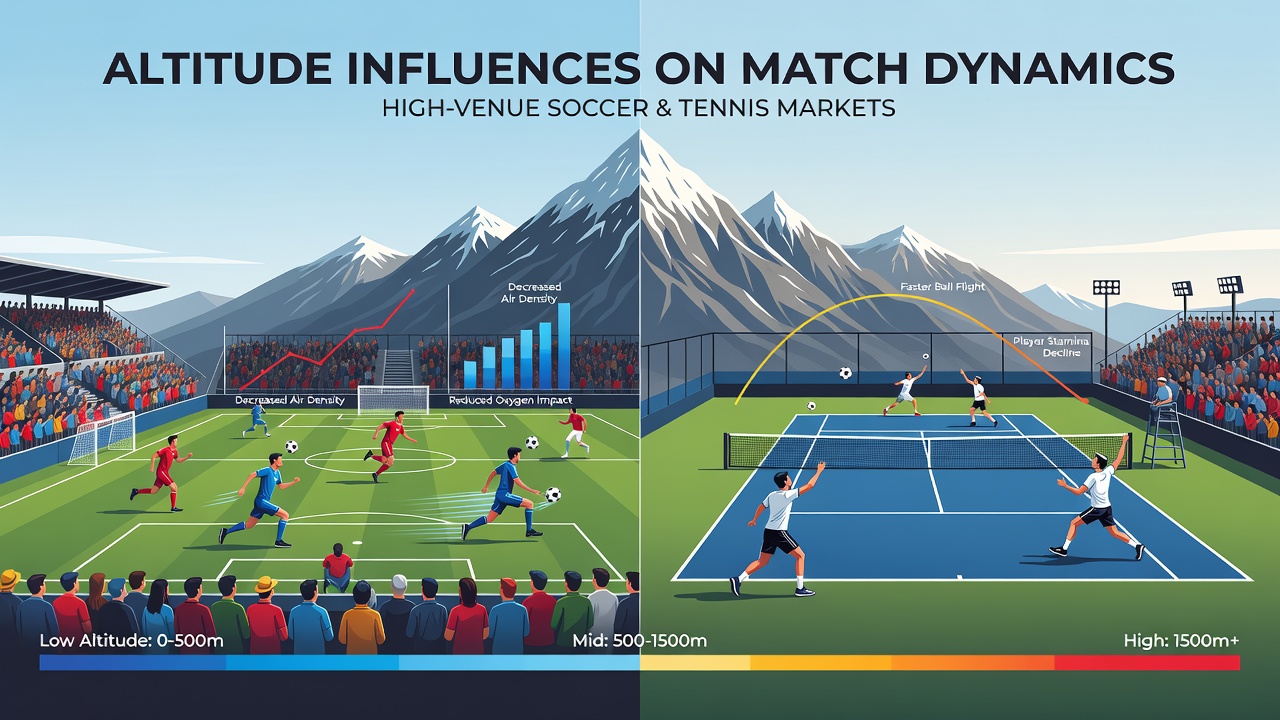
Altitude Influences on Match Dynamics in High-Venue Soccer and Tennis Markets
High-altitude venues create distinct conditions that reshape how soccer and tennis unfold, from ball behavior to player endurance, and these factors feed directly into betting market calculations across global operators. Venues situated above 2,000 meters above sea level reduce oxygen availability while decreasing air density, which allows balls to travel farther and faster than at sea level. Observers note that these physical changes appear consistently in matches played at locations such as La Paz, Bolivia, at roughly 3,600 meters, and Bogota, Colombia, near 2,600 meters, where both sports schedule regular fixtures.
Physical Mechanisms at Play
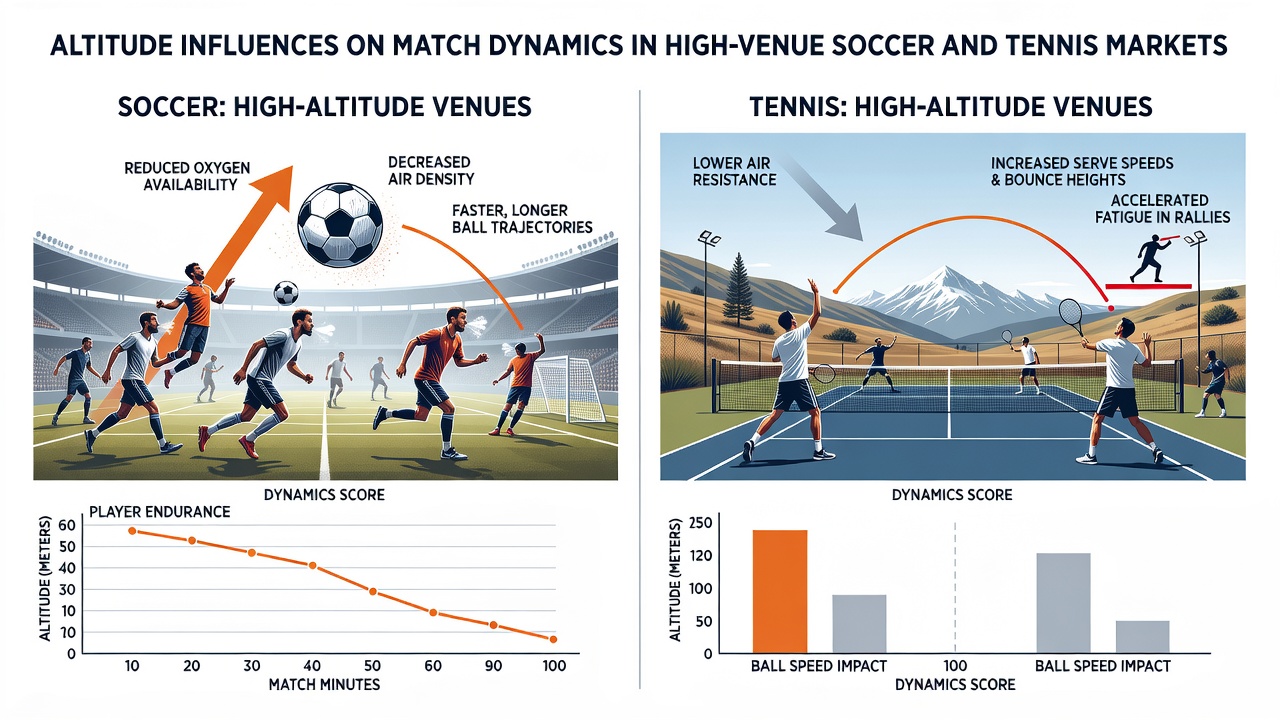
Reduced atmospheric pressure at elevation decreases drag on projectiles, so soccer balls cover greater distances on passes and shots while tennis balls maintain higher speeds after racket contact. Data from physiological studies indicate that players experience faster onset of fatigue because oxygen uptake declines, which shortens effective playing time in later stages of matches. Researchers have measured these effects through heart rate monitoring and blood oxygen saturation tests during competitive play, confirming that recovery intervals between intense efforts lengthen noticeably above 2,500 meters.
Match statistics collected over multiple seasons reveal patterns in goal scoring and rally lengths that align with altitude gradients. Soccer matches at high venues often produce elevated shot volumes early, yet completion rates drop as minutes accumulate, while tennis encounters show compressed point durations on serve-dominated surfaces. These trends hold across both men’s and women’s professional circuits when schedules rotate through the same stadiums year after year.
Soccer Dynamics in Elevated Stadiums
Soccer teams accustomed to lower elevations frequently display measurable drops in distance covered during the second half at sites like Estadio Hernando Siles in La Paz. League records from Bolivia’s top division document higher average goal totals per game compared with fixtures played at under 1,000 meters, although defensive organization tends to tighten as fatigue sets in. Visiting squads that arrive several days early show smaller performance gaps in tracking data than those that fly in closer to kickoff, according to positional analysis from multiple CONMEBOL competitions.
Coaches adjust tactical setups by emphasizing shorter passing sequences and rapid transitions before oxygen debt accumulates. Midfielders in particular register lower sprint counts in the final 30 minutes, shifting emphasis toward set-piece situations where altitude effects on ball flight become more predictable. October 2026 schedules include several Bolivian Primera Division clashes at altitude that will test these adaptations once again as clubs prepare for continental qualification rounds.
Tennis Performance Shifts
Tennis at altitude alters serve speeds and bounce characteristics, prompting players to modify spin rates and court positioning. ATP and WTA events staged in Quito, Ecuador, around 2,800 meters have produced serve velocity increases averaging several kilometers per hour compared with baseline measurements at lower sites. Rally lengths shorten because balls skid through the air with less resistance, which favors aggressive baseline play over extended exchanges.
Studies compiled by sports science groups affiliated with the International Tennis Federation track how unforced error rates climb in later sets when players operate under sustained hypoxic stress. Those who incorporate altitude-specific acclimatization protocols report steadier service percentages across best-of-three formats. Scheduling patterns show that October 2026 will feature qualifying rounds for South American tournaments at comparable elevations, giving data analysts fresh samples to evaluate serve dominance metrics.
Market Implications Across Both Sports
Betting exchanges adjust totals and player props in real time when fixtures move to high venues because historical datasets demonstrate repeatable deviations from sea-level norms. Soccer over/under lines on total goals widen during the opening weeks of altitude-based campaigns, while tennis match-win probabilities shift toward servers with proven track records at elevation. Live trading volumes increase around halftime or mid-match because fatigue curves become more visible in possession and point-construction statistics.
Operators incorporate travel and acclimatization data into pre-match models, drawing on records maintained by regional federations that monitor squad movements across the Andes corridor. These inputs refine handicap offerings and in-play thresholds, particularly when teams or players transition between low and high venues within short windows. Patterns observed in recent seasons indicate that early-round tennis matches at altitude produce more pronounced serve advantages than later rounds, where cumulative fatigue equalizes some edges.
Conclusion
Altitude continues to exert measurable influence on soccer and tennis outcomes through changes in ball flight, endurance profiles, and tactical execution. Market participants who integrate venue-specific historical data with current physiological indicators gain clearer visibility into how matches evolve once play begins. As calendars advance into late 2026, additional fixtures at established high-elevation sites will supply further observations that refine both performance analysis and pricing frameworks across these sports.