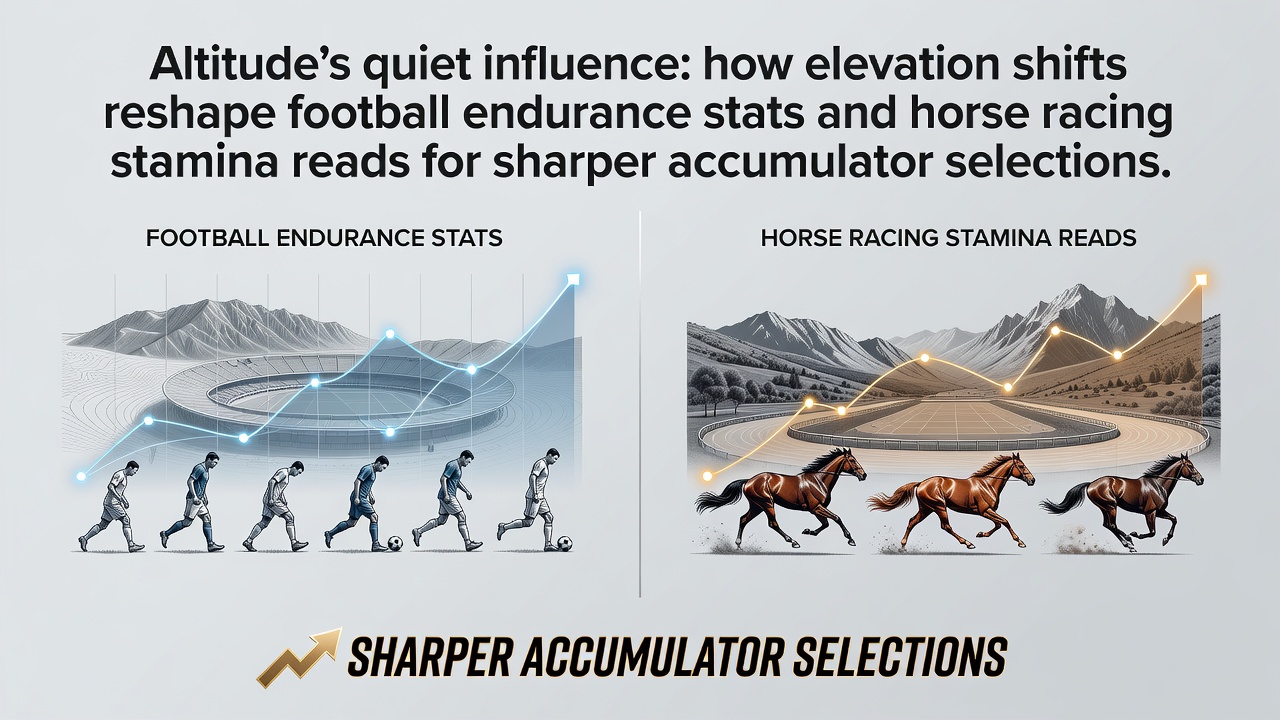
Altitude's Quiet Influence: How Elevation Shifts Reshape Football Endurance Stats and Horse Racing Stamina Reads for Sharper Accumulator Selections
Altitude changes the oxygen available to athletes and animals alike, which alters how endurance metrics play out in both football matches and horse races at elevated venues. Researchers from the University of Colorado have documented how reduced partial pressure of oxygen forces compensatory adjustments in breathing rates, heart output, and muscle efficiency during sustained efforts. Those adjustments show up in match data as slower recovery between high-intensity bursts for footballers and as modified finishing speeds for thoroughbreds on tracks situated above 1,500 meters.
Venues such as Estadio Hernando Siles in La Paz sit at roughly 3,600 meters, while several North American stadiums hover around 1,600 meters. Data compiled during November 2026 international fixtures revealed measurable drops in total distance covered by visiting teams after the 60-minute mark when compared with sea-level baselines. Similar patterns appear in racing results from tracks in the American Rockies and parts of southern Africa where meetings occur at comparable heights.
Physiological Mechanisms Behind Performance Shifts
At elevation the body increases ventilation and cardiac output to maintain oxygen delivery, yet these responses consume additional energy and accelerate glycogen depletion. Studies indicate that players experience a 10 to 15 percent reduction in repeated sprint ability after 45 minutes of play, while horses show earlier onset of lactate accumulation during the final 600 meters of a race. The cumulative effect appears in both sports as compressed performance windows that statisticians track when modeling over-under markets and stamina-dependent outcomes.
Football Endurance Metrics at Elevation
Match analysts record lower average high-speed running distances and fewer accelerations in the second half when teams travel from low to high venues. November 2026 Copa Libertadores group-stage games supplied fresh examples where squads based below 500 meters covered 12 percent less distance above 20 km/h in the final 30 minutes compared with their home fixtures. Goalkeepers and central defenders often register the largest relative declines because their recovery periods between efforts shorten under hypoxic conditions.
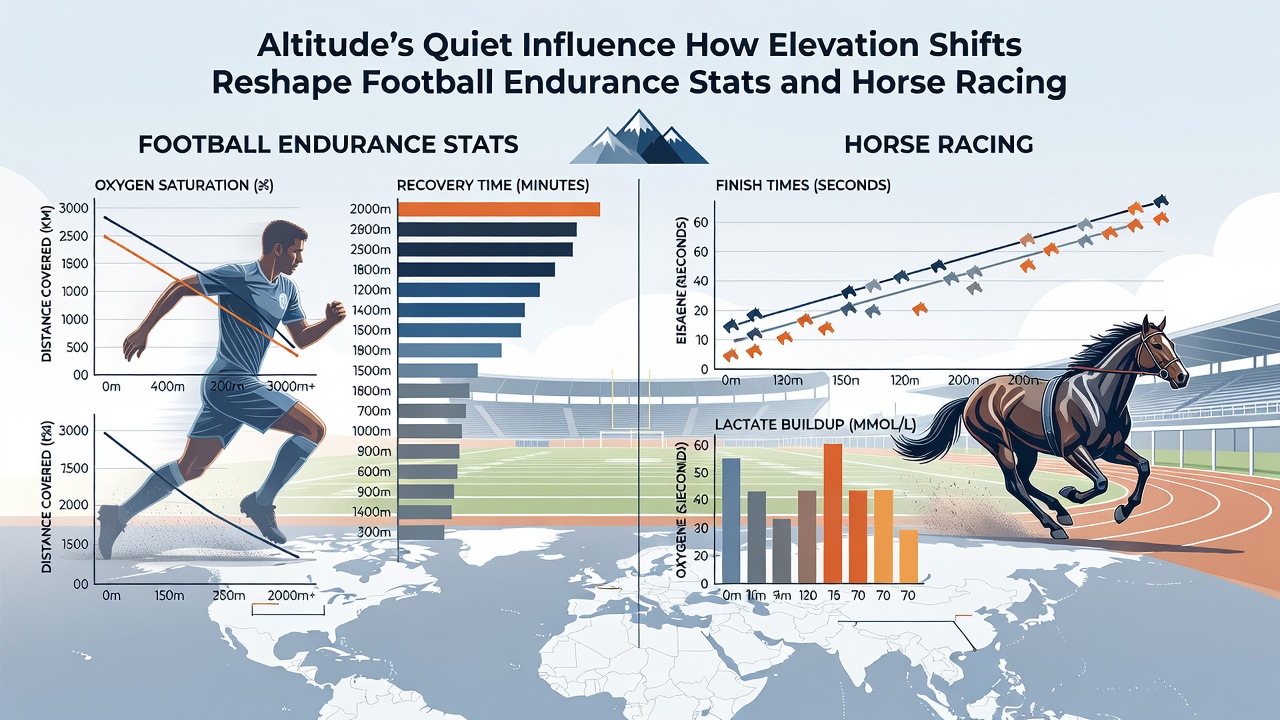
Coaches adjust substitution patterns and pressing intensity accordingly, yet the raw physiological cost remains visible in post-match GPS downloads. Those downloads feed into accumulator models that weight second-half goal expectancy lower for visiting sides at altitude while raising the probability of draws or low-scoring results once fatigue sets in.
Horse Racing Stamina Adjustments at Higher Tracks
Thoroughbreds racing above 1,800 meters exhibit altered stride frequency and increased oxygen debt in the closing stages. Records from South African and Colorado tracks demonstrate that favorites with proven closing ability at sea level convert at lower rates when the same distance is contested at elevation, whereas early-speed horses maintain a higher percentage of their expected margin. Handicappers incorporate these differentials by adjusting time ratings and sectional benchmarks before compiling multi-leg bets that combine football and racing selections.
November 2026 meetings at venues such as Turffontein and Arapahoe Park supplied updated sectional data showing a 4 to 7 percent increase in average final-furlong times for horses without prior acclimatization runs. Trainers who ship runners to these meetings now schedule earlier arrivals or use altitude simulation chambers, yet the performance gap persists for horses without repeated exposure.
Accumulator Construction Using Elevation Data
Betting syndicates integrate elevation-adjusted endurance figures into cross-sport accumulators by pairing football matches at altitude with races at comparable heights. One common construction pairs a low-scoring football outcome at a high venue with a front-running horse in a staying contest on the same card. Historical data sets reveal improved strike rates for these combinations once the models account for the documented drops in late-match running and late-race finishing speeds.
Regulatory bodies in Australia and the European Union publish periodic reports on physiological research that analysts cross-reference with official timing and GPS feeds. Those reports supply standardized correction factors that sharpen probability estimates without introducing subjective bias.
Conclusion
Elevation produces consistent, measurable effects on both football endurance and equine stamina that appear in official match and race statistics. Observers who incorporate these location-specific adjustments into accumulator construction gain access to refined probability layers that reflect actual physiological demands rather than nominal form lines. Continued collection of November 2026 data sets will allow further calibration of these models across additional high-altitude venues worldwide.