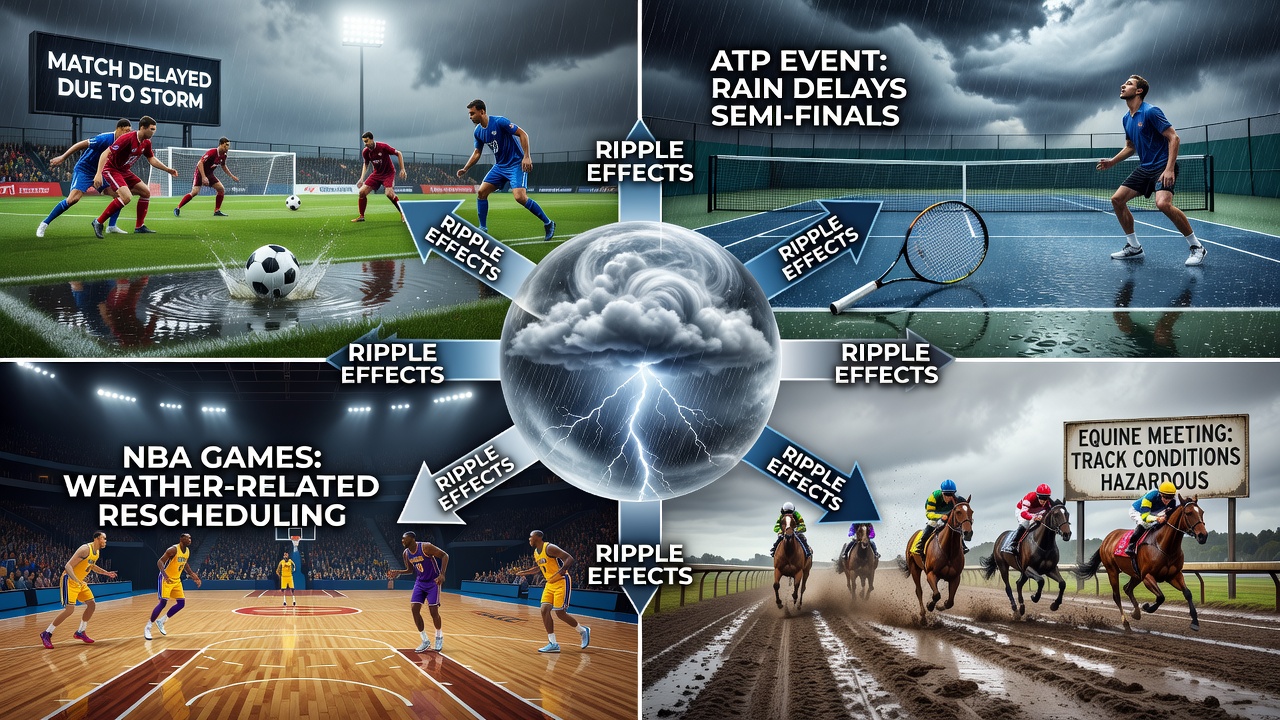
Weather Shifts and Their Ripple Effects on Outcomes in Soccer Leagues, ATP Events, NBA Games, and Equine Meetings
Weather patterns exert measurable influence across multiple sports, and observers note distinct patterns when temperatures drop, precipitation increases, or wind speeds rise during scheduled competitions. Data from major leagues shows that field conditions in soccer change when rainfall saturates pitches, which alters ball roll and player footing while increasing the likelihood of defensive setups in matches across European and South American leagues. Researchers tracking Premier League and Serie A fixtures have recorded higher draw rates in wet conditions compared to dry ones, and those figures align with similar observations in other divisions where grounds crews struggle to maintain consistent surfaces.
Soccer Leagues Respond to Shifting Conditions
Coaches adjust tactics when forecasts predict heavy rain or sudden temperature swings, and analysts have documented these shifts through video review of games played in November across various seasons. Teams in northern leagues often adopt more direct passing styles once grass becomes slippery, and statistics compiled by performance tracking services indicate reduced successful dribble rates under those circumstances. Temperature drops below certain thresholds also correlate with increased muscle strain incidents according to medical reports issued by league physicians, which in turn affects squad rotation decisions and substitution patterns during congested fixture periods.
ATP Events Face Wind and Temperature Variables
Tennis matches on outdoor courts experience direct disruption from gusts that exceed typical thresholds, and ball trajectory studies demonstrate how crosswinds push serves and groundstrokes off intended lines. Data collected at ATP tournaments held in regions prone to autumn weather fronts shows extended rally lengths when humidity rises, because the ball absorbs moisture and travels slower through the air. Players who compete in multiple time zones during late-year swings must also contend with jet-lag combined with cold mornings that stiffen joints, and medical staff at those events report higher rates of cramping when dew points climb overnight.
NBA Games and Indoor Climate Interactions
Although NBA contests occur inside climate-controlled arenas, external weather still reaches the court through travel logistics and arena energy demands. When winter storms hit cities hosting back-to-back games, flight delays force teams to arrive with less recovery time, and performance databases reveal dips in three-point percentages following such disruptions. Observers tracking November 2026 schedules note that teams traveling through areas expecting early cold fronts often request adjusted practice windows, and league travel coordinators have implemented contingency protocols based on historical weather data from the National Oceanic and Atmospheric Administration.
Equine Meetings and Track Surface Changes
Horse racing outcomes shift noticeably once tracks receive substantial rainfall, because surface composition moves from firm to yielding or heavy, which changes stride patterns and energy expenditure for different runners. Records maintained by racing authorities in Australia and North America demonstrate that certain sires produce offspring better suited to softer going, and bettors who review past performance charts adjust selections accordingly when forecasts call for precipitation. Wind also plays a role at exposed tracks, where headwinds on the home straight can slow overall times, and clockers have logged consistent patterns across multiple meetings when gusts exceed fifteen kilometers per hour.
November brings transitional weather to many racing jurisdictions, and meetings scheduled during that month frequently encounter mixed conditions that test both equine adaptability and jockey decision-making at the start. Trainers monitor ground reports closely because early morning dew combined with daytime sun can create variable patches that affect footing at different sections of the course.
Cross-Sport Patterns Emerge from Shared Data
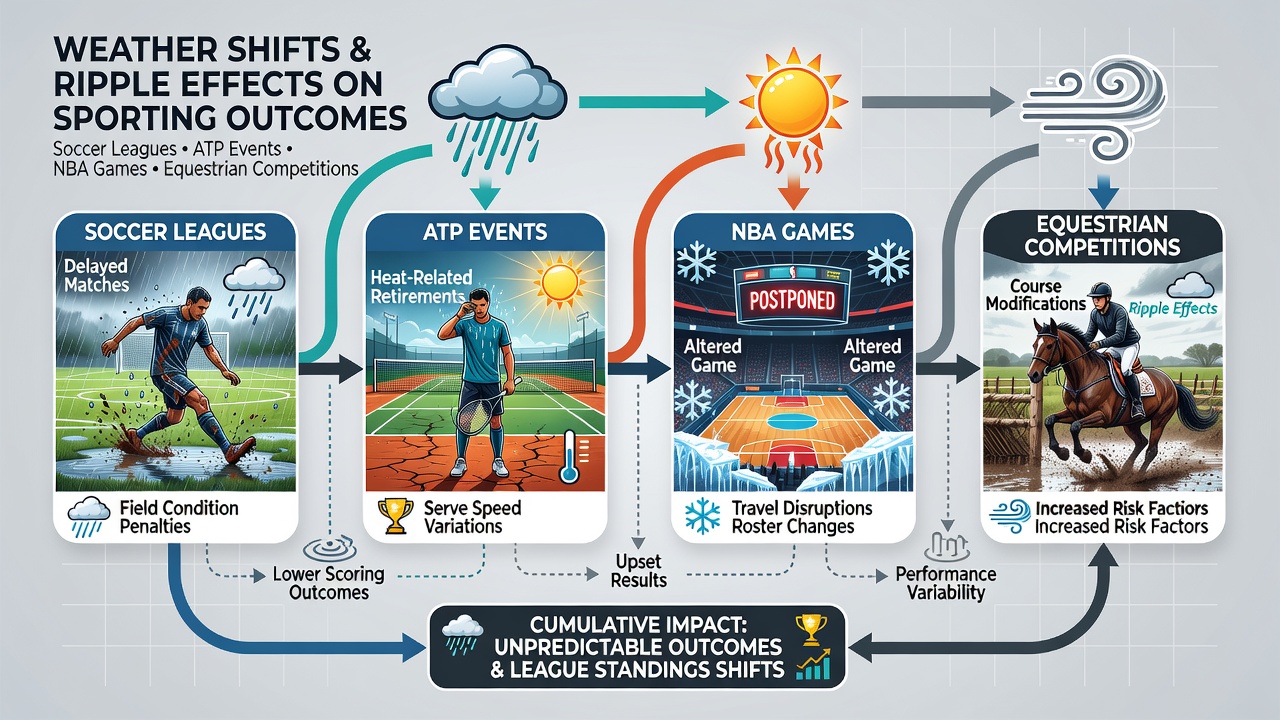
Analysts who examine weather archives alongside match results find overlapping trends across the four disciplines, particularly when rapid pressure changes accompany storm systems. A study released by the Australian Bureau of Meteorology examined correlations between atmospheric conditions and athletic output, revealing that high humidity levels precede measurable declines in repeat sprint ability across team sports while also extending recovery intervals between points in individual events. Those findings prompted several professional organizations to integrate real-time weather feeds into pre-match preparation protocols.
Travel disruptions caused by adverse weather further compound performance variables, and league schedulers now factor long-range forecasts into fixture planning to reduce back-to-back exposures. Research institutions in Canada have published reports on how cold air masses influence muscle elasticity, and those reports are referenced by medical teams preparing athletes for late-autumn competitions in multiple sports.
Conclusion
Weather shifts continue to produce documented effects on outcomes across soccer leagues, ATP events, NBA games, and equine meetings through direct impacts on surfaces, indirect effects on travel and recovery, and measurable changes in statistical profiles. Organizations that integrate meteorological data into operational planning demonstrate consistent advantages in anticipating adjustments required by athletes and support staff. Continued collection of performance metrics alongside environmental readings will likely refine predictive models used by teams and event organizers in coming seasons.